

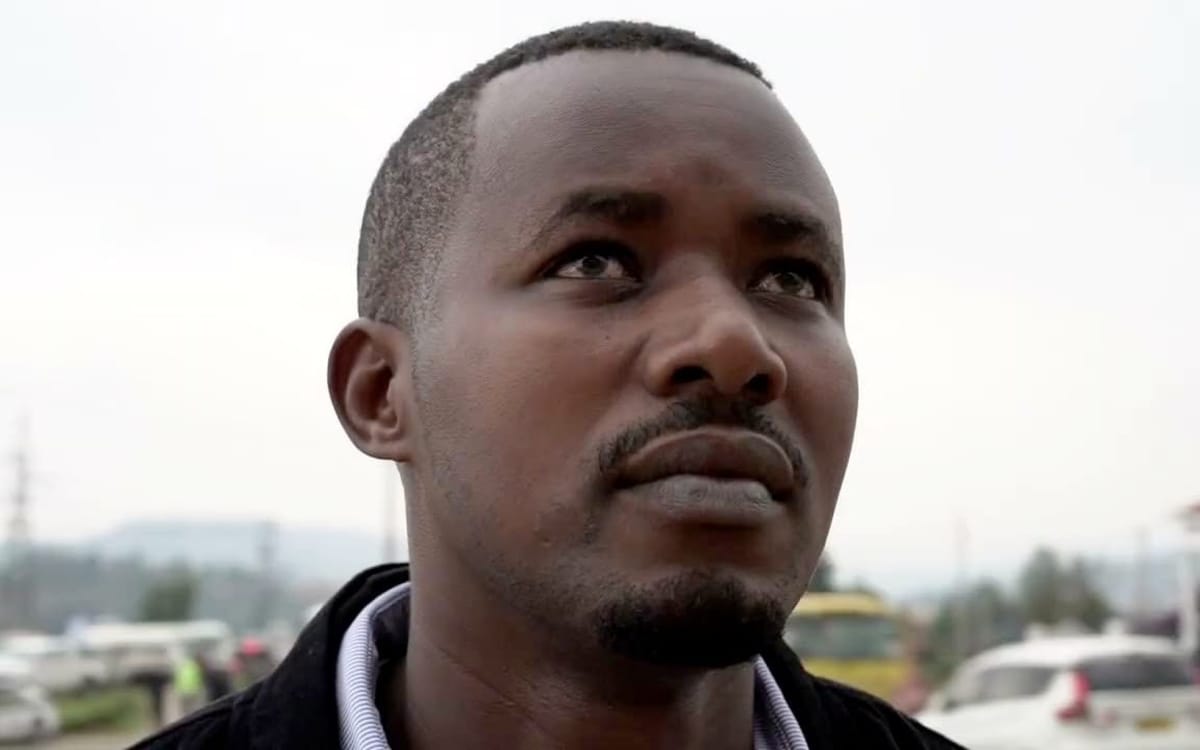
A short film about a survivor’s story has won audience and jury recognition at two international festivals.
Jerome Irankunda just was six years old when the genocide against the Tutsi began in Rwanda in 1994, incited by Hutu Power extremists. His family took shelter in Kibeho church in southern Rwanda, but when it came under attack he fled to Burundi with his uncle, surviving months in a refugee camp before they were able to return to Rwanda. He never saw his parents again.
Why We Dance is a short documentary built around Jerome’s testimony. It has picked up two film awards: the Audience Award for Best Short Documentary at the Toronto/Los Angeles Documentary Feature and Short Film Festival in April 2026, and the Award of Excellence in the Documentary Short category at the IndieFEST Film Awards. The University of Aberdeen is among the institutions behind the research project that produced it.
Would you like to see your message here? Let's talk.
POST highlights Aberdeen’s creative scene, from theatre and music to visual arts. We focus on showcasing the city’s unique talent and supporting local voices.
Through stories, artist profiles, and event coverage, we’re here to share what makes Aberdeen vibrant. Sign up for free or support us and go ad-free for just £3 a month.
How Aberdeen is involved
The film grew from a research project called Survivor-Centred Visual Narratives, a Canadian partnership initiative led by the University of Victoria, with the Universities of Aberdeen and Glasgow leading its Rwanda research. Behind that work are two academics who have made it their focus: Dr Fransiska Louwagie, Senior Lecturer in French and Francophone Studies at the University of Aberdeen, and Dr Erin Jessee, Senior Lecturer in History at the University of Glasgow.
The project pairs survivors with graphic novel artists and researchers to co-create visual narratives and short documentaries: survivor-centred, collaborative, and built around relationships rather than extraction.
Inside the film
Filmmaker Marc Ellison captures the relationship that developed between Jerome and graphic novel artist Michel Kichka, himself a second-generation Holocaust survivor, during interviews for a forthcoming graphic novel about Jerome’s life.
The film also moves through the physical places that shaped Jerome’s experience: the site of his first home, the avocado tree where his family gathered when they realised the danger they were in, and Kibeho church. Jerome is now a community leader and educator, helping Rwanda’s many child survivors into adulthood, and raising his own family.
Louwagie and Jessee said the film “documents the relational process which underpins our work with survivors, and will support our efforts to engage young people as they build an understanding of the genocide and its impacts.”
Screenings and where to find it
The film received its first public screening in Kigali on 17 April as part of this year's Kwibuka commemoration, marking 32 years since the genocide against the Tutsi. A screening of the project documentaries is hoped to be hosted in Aberdeen later this year. We'll let you know details as soon as we have them.

Comments ()